Telepresence

Telepresence

The Role of Managed Services for Telepresence

The introduction of telepresence is making a resounding impact and causing enterprises to change the way they communicate by incorporating video as an essential ingredient in their communications mix. Along with the emerging importance of telepresence within organizations around the world, the role of the Managed Service provider in the video and telepresence space has become increasingly relevant. In many cases, it's the Managed Service that can play the key difference in the success or failure of telepresence within an organization.


Understanding Telepresence

Telepresence

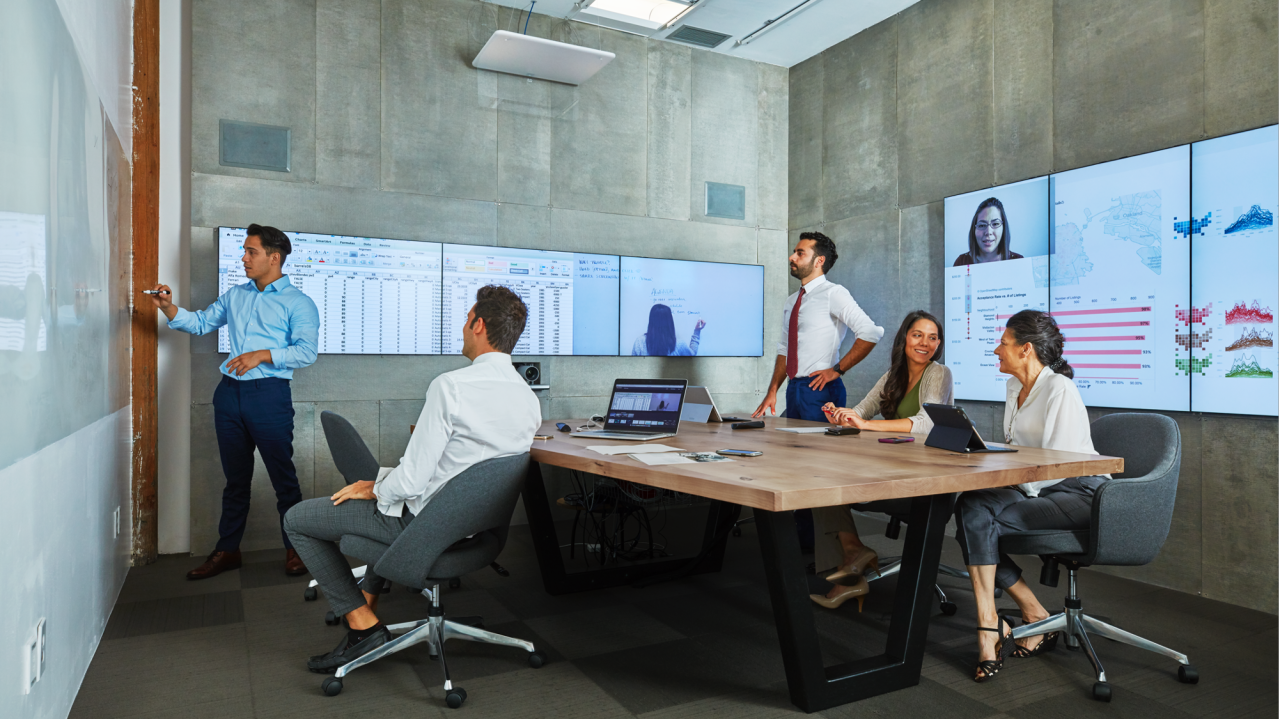
Before you fully appreciate the role that a service provider plays as it relates to telepresence, it’s important to understand what telepresence actually represents. Telepresence is a term coined to describe a video communication solution, where the audio, visual and physical elements of a meeting room environment are designed in a way to create an immersive experience. In addition to identical or nearly identical furniture, monitors, cameras, speakers and video devices which are installed at offices in different locations, telepresence equipped locations use an IP network for connectivity. When a video meeting is initiated, the people on either side see and hear each other in a high quality, life size image which yields the appearance that they are actually sitting in the same room. Because of this arrangement of cameras, monitors and speakers, the technology becomes part of the room and the meeting participants become immersed in the experience, focusing on the agenda of the meeting, rather than on the technology that is driving it.


Is Telepresence Just Video Conferencing Under Another Name?

Yes and No - telepresence is in fact a form of video conferencing. Beyond overall adoption challenges, video conferencing has been faced with other perceived barriers including: quality of the network, non-standard room environments, and lack of widely accessible expertise and support.

  • Network - When initially introduced, video conferencing was invariably compared to the television and telephone - both of which took many years to be perfected but have now become synonymous with reliability and quality. In a similar fashion, traditional video conferencing has been slow to evolve into a fully reliable communications method due to the limited quality and capacity of network types (such as ISDN), ease-of-use issues and lack of reliability. Additionally, there was limited focus and expertise focused on addressing these issues that caused an inconsistent and poor experience to the users of the technologies.

  • Room Environments - Traditional video conferencing equipment was often purchased and placed in conference rooms with little or no regard to the quality of lighting, the audio or the placement of the camera for optimal coverage of meeting participants. With video systems in vulnerable positions and capable of being moved out of position, there was a high potential for a poor overall experience. In fact, users often complained they could not see or hear people at other sites with the cause being more related to poor lighting, acoustics, and room layout rather than the equipment or the network.

  • Support / Expertise - Traditional video conferencing also suffered from a lack of overall support and "ownership", having rarely received the appropriate level of attention that other "mission critical" applications were given. The result was a perceived difficulty in using video and even worse, many employees not even being made aware that video conferencing was a communication tool available to them.

    Beginning in late 2000, the transition to IP and the creation of a new breed of service provider dedicated to supporting video communications yielded significant strides in improving the overall reliability, ease of use and performance. With these improvements, video conferencing adoption began to occur in many organizations. At the same time, with greater importance being placed on "green" methods and cost reduction efforts, video was on the verge of becoming a "mission critical" application.

Telepresence: The New Era of Video Conferencing

Originally marketed by a company called TeleSuites, telepresence has in fact been available for a number of years. TeleSuites gained early traction by building and managing "telepresence type" rooms for several organizations around the world. That said, the term telepresence did not become prevalent until some big technology companies, including HP and Cisco recognized the potential and began marketing the concept globally. There was a common objective: join the emerging video communications market, but distance the "new generation" technologies from the negative connotations associated with the term video conferencing.

With its launch of telepresence in 2006, Cisco and their CEO, John Chambers have become the driving force for global awareness of telepresence and have yielded the video market world-wide attention and increased adoption. Since that time, all the leading Video Conferencing industry manufacturers have added to the accelerated adoption and awareness by launching telepresence solutions of their own.

And telepresence is coming full-circle. Although telepresence is regarded as a room, immersive experience and, in its original form, includes a complete "room" configuration, several manufacturers are moving toward single screen stand alone models that resemble traditional video conferencing systems.

These developments have driven a new expectation level that represents a significant change from the traditional video conferencing era such that high quality "telepresence" immersive experiences have become the benchmark for quality and performance of video in the business community.


Market Projections Driven by The Telepresence Era

There are many conditions driving an increased demand for high quality video communications. Global warming, rising fuel prices, an economic downturn and terrorism have all combined to create a "perfect storm" of demand for telepresence. The different approaches implemented by the telepresence user communities to capitalize on this emerging market have added to the overall awareness and attention of the telepresence market.

According to the IDC and Cisco, the worldwide growth of the telepresence market is projected to grow to $5 billion (U.S.) by 2011, with the largest market growth ocurring around network and managed services. 1 (Cisco company literature, 2007)

Telepresence is increasingly being sought as a collaboration tool between business partners and customers. Although the price tag of installing a telepresence room may seem to indicate that it is only designed for C level executives, in reality telepresence technology is designed to help any organization reduce costs and improve communications. In addition to playing an important role in addressing the issue of global warming and carbon footprint reduction, telepresence can help organizations save money on travel and can help to increase productivity.

A recent study by TRI2 (Telemanagement Resources International Inc. private research study 2007), which included discussions with organizations who are using telepresence, identified the following business objectives behind telepresence:

  • Greater operational efficiency
  • Optimization of global resources & competencies
  • Mitigate risk & promote secure business interactions
  • Raise quality of life
  • Promote a homogenous, robust culture

Respondents to the study had the following to say about telepresence:

  • "Telepresence provides significant communications benefits. It is a far more efficient approach to working."
  • "Telepresence provides a meeting across the seas as easy to set up as walking down the corridor to gather up colleagues."
  • "Telepresence is not just about saving money on international travel, it is about getting smarter at communication, strategy, and collaboration."
Clearly, telepresence has the ability to impact the bottom line of any organization in a positive way with both quantitative benefits and qualitative value.


VNOC Services: A Critical Component of the Telepresence Experience

When everything is operating and functioning properly, telepresence offers a superior experience to the users. However, support of telepresence rooms can be a daunting task and most organizations lack the expertise and available resources to dedicate to this effort. As a result, a new type of video managed services has emerged which is routinely offered along with telepresence rooms called "VNOC" services.

VNOC stands for "Video or Virtual" Network Operations Center and is generally comprised of a suite of services tailored specifically for the unique requirements of Telepresence rooms.

Learn more about VNOC and how Glowpoint can help you to make the most of your telepresence investment.


RELATED LINKS:

Glowpoint Overview Video:

DOWNLOADS:

CONTACT INFORMATION:

SALES INQUIRIES
email: sales@glowpoint.com

GENERAL INQUIRIES
telephone: (866) 456-9764
email: contactme@glowpoint.com

TECHNICAL SUPPORT
telephone: (866) 456-9764, option 5
email: nocstaff@glowpoint.com

SOCIAL NETWORKS:

Follow Us:
Facebook LinkedIn Twitter YouTube
Bookmark and Share